
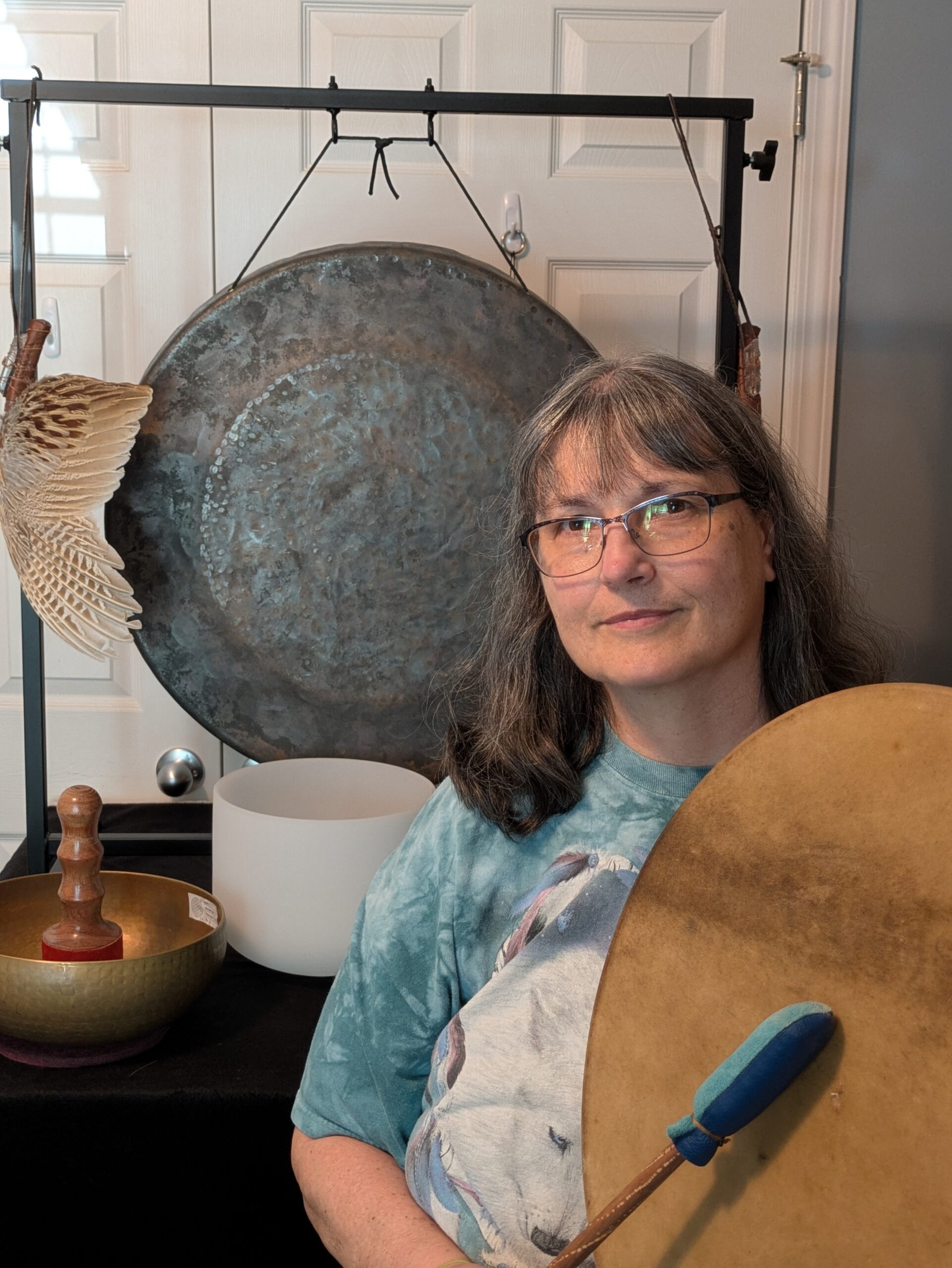
Sometimes people make audacious claims about “crystal” singing bowls. “I remember hearing or seeing them in a past life in Lemuria/Atlantis or hearing them played in ancient Greek, Egyptian, or Roman temples and baths or they were a key part of Celtic or Druid ceremonies.” Of course, we do not have access to all the knowledge of ancient times, but no actual archaeological evidence exists to support these types of claims. Many celebrities attach their name to bowls claiming “their” bowls have ethereal or mystical properties. Most are marketing scams used to jack up the prices on unsuspecting customers. Do not be fooled.
Crystal bowls are beautiful and elicit gorgeous tones. However, they are a modern invention and a new addition to the repertoire of instruments used by sound healers. They are not ancient in any way. People are surprised to learn they are not even crystal; they are glass.
So, what is the difference between glass and crystal?
Glass is made from silica sand, also called industrial sand, and is composed of 95% pure silicon dioxide, a small amount of soda (sodium carbonate) and limestone (calcium carbonate). It is non-crystalline and more like liquids, plastics, rubber, or gels. It is an amorphous solid meaning it lacks a definite shape, or form.
“Crystal Glass” is a marketing description for high clarity glass made by replacing the calcium content with lead oxide, (or barium or zinc). Items marketed as “lead crystal” typically contain 10 to 30% lead oxide. The lead increases weight, clarity, and brilliance. It is known for refracting light into rainbows and is highly prized for drinkware and chandeliers because it can be molded thinner, cut with intricate designs, and produces a distinct ringing sound when tapped.
From mineralogical or geological perspectives, natural crystals are made of the same materials as glass, silicon, and oxygen. But the internal structure is more important than the material it is made of. Unlike the unorganized structure of glass, crystals MUST have atoms or molecules arranged in precise, repeating 3D patterns that form distinct geometric shapes with flat faces,
Crystal singing bowls emerged in the late 1980s as a byproduct of solar and semi-conductor industries. Those industries use industrial quartz crucibles (which are high precision, high purity glass bowls) to make silicon wafers.
People noticed the crucibles produced powerful resonant sounds and began utilizing the containers as musical instruments and therapeutic vessels coining the term “crystal vessels” to describe them.
Manufacture of the “crystal vessels” became a separate industry. High purity quartz is crushed into sand, cleaned, heated to 4,000 degrees F in a centrifugal mold and placed in a furnace until molten. The spinning motion forces the molten quartz against the mold walls forming a bowl shape and ensures uniform thickness. It is cooled slowly to avoid cracking and sandblasted to achieve a frosted or opaque appearance. It is sanded precisely to create specific musical notes.
“Crystal singing bowls” remind me of Jewelweed. Jewelweed is the primary plant that grows alongside Poison Ivy and is used to treat its rash. “Crystal bowls” developed alongside computer chips. I often think of “crystal singing bowls” as an antidote to the stress brought on by computerization!
I have a beautiful full octave set of crystal singing bowls. Book a session today tailored to your unique needs and experience their soothing tones at wholeharmonichealing@gmail.com.
