
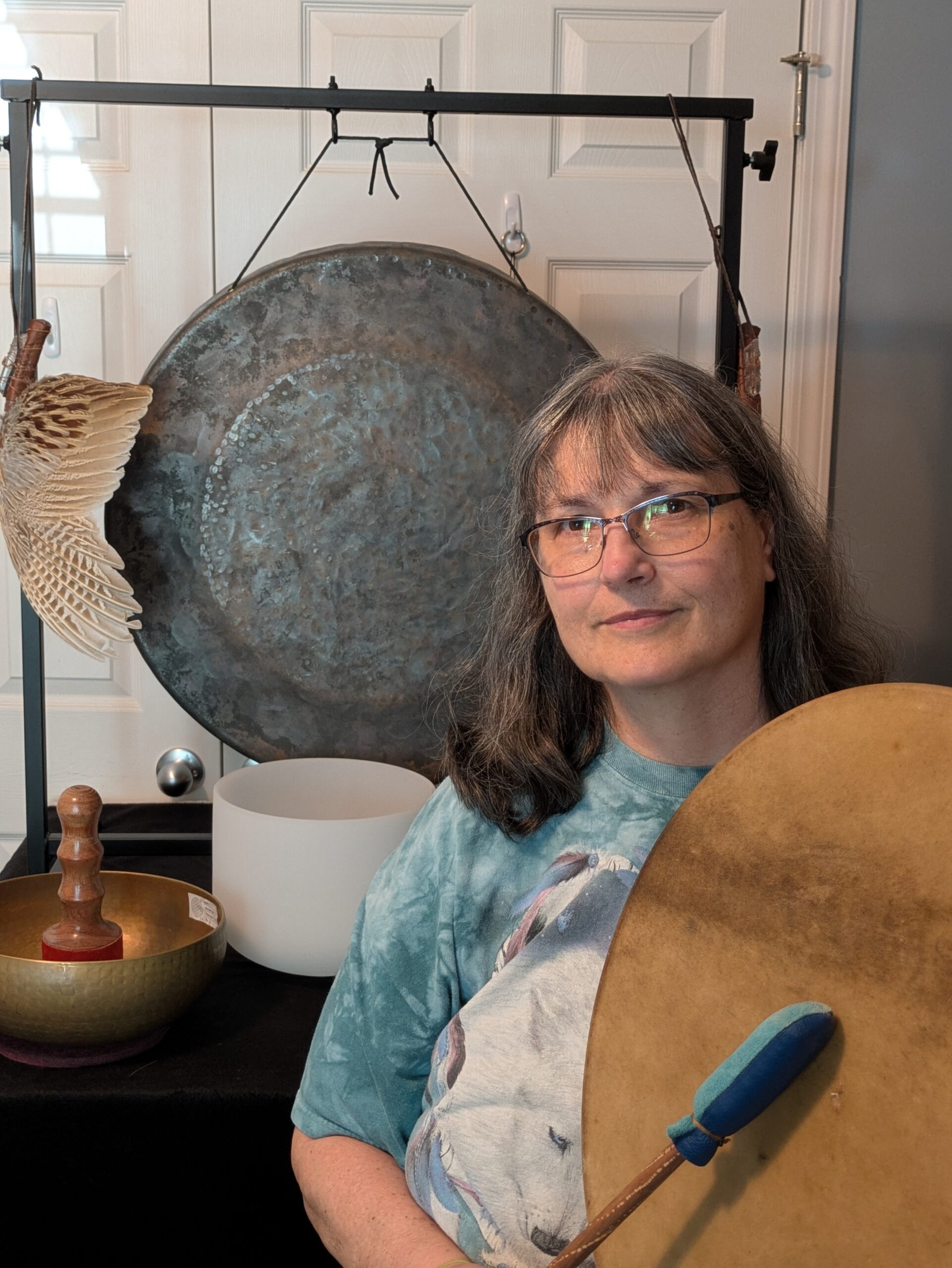
“Tibetan” singing bowls are NOT from Tibet. Tibetan Buddhism and culture historically do not use “singing” bowls in meditation or ritual. The association with Tibet stems from the post 1959 exodus when Tibetan refugees sold them in India leading westerners to associate the bowls with Tibetan culture.
Historians worldwide have concluded that “singing bowls” were probably first crafted as cooking utensils. They were used to measure and store grains, or as household eating bowls. A second possible household use is that they were a form of currency owing to their metal content or they could have been offered as dowry or wedding gifts.
It is also generally accepted that “singing bowls” were derived by inverting Asian temple bells. The standing temple bell originated in East Asian traditions of China, Burma, Japan, India, and later in the Himalayan region. They have been used for thousands of years in sacred temple prayers, rituals, and chants.
Some of the oldest bells ever discovered in the archaeological record were found in ancient Mesopotamia dating back to 11th century BCE. The oldest specific example is a small bronze tintinnabulum, found in the Babylonian palace of Nimrod by Austin Henry Layard in 1849. The bells were used as amulets to ward off evil.
Other ancient bells include “Nao” bells from the from the Shang dynasty (6th to 11th centuries BCE) in China, (likely derived from grain scoops) and Indian Kansa and Ghanta bells used for religious practices, and temple ceremonies.
Some bells were eventually inverted and the handle removed to create a standing bowl. Vietnam, Japan, India, and China have examples of ancient bowls that have existed for centuries and are widely used in temples for collecting donations, to mark prayers and honor ancestors.
“Singing” the bowls by rubbing the rim with a mallet to create a sustained, resonant tone is a modern invention. The bowls were introduced to western Buddhist centers around 1971 by Chogyam Trungpa, a Tibetan meditation master who had learned the practice from Zen masters in Japan.
Do “Tibetan” singing bowls have 7 metals?
Many modern and traditional descriptions claim Tibetan singing bowls are made from seven sacred metals: gold, silver, copper, iron, tin, lead, and mercury.
Each of the seven metals traditionally represents a celestial body, gold is for the sun, silver the moon, mercury the planet Mercury, copper for Venus, iron for Mars, tin for Jupiter, and lead for Saturn.
Researchers state that the seven metal formula is a modern invention rather than a truly ancient practice. The myth stems from blending new age astrology with western alchemy and Tibetan traditions.
Scientific studies and metallurgical tests on hundreds of authentic antique singing bowls have shown that they are primarily made of traditional bell metal bronze, (an alloy of 80% copper and 20% tin). While tiny trace elements can appear in old metals due to impure smelting, incorporating specific high-cost gold/silver or highly toxic lead/mercury would be illogical and impractical.
The myth continues because it is a lucrative marketing tool that makes bowls seem more exotic, historical, and healing. Today the “Tibetan” bowl industry thrives on cultural branding with most products produced in Nepal and sold to tourists and westerners.
I have a beautiful multi-octave set of “Tibetan” singing bowls. Book a session today tailored to your unique needs and experience their amazing tones at wholeharmonichealing@gmail.com. Coming soon, 30-minute Tuning sessions for $49.95.
